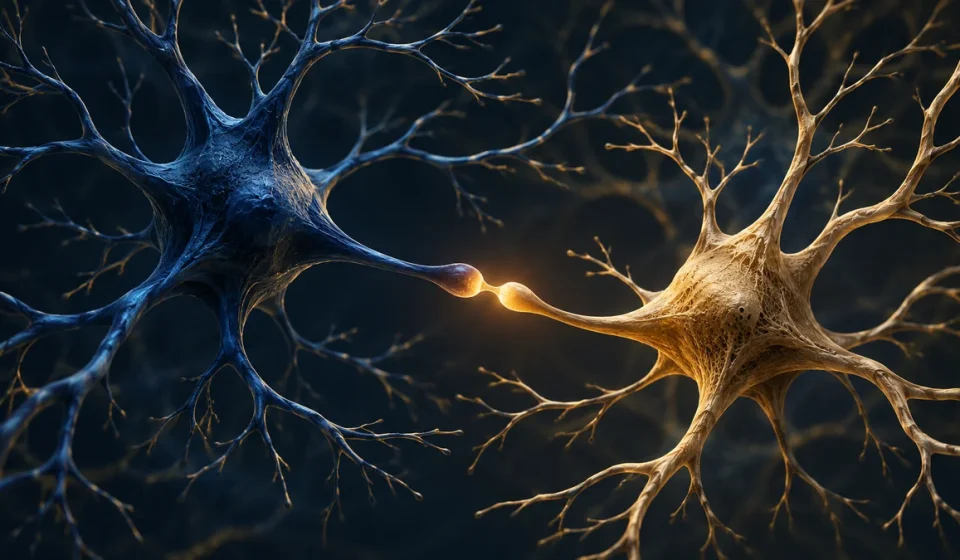

Learning to juggle, recognizing a new accent, and adapting after an injury involve very different challenges. All can raise questions about neuroplasticity: the nervous system’s capacity to change with development, experience, learning, and altered conditions.
The term describes a broad set of processes, not one switch for improvement. A change can be functional or structural, beneficial or unhelpful, temporary or persistent. “The brain can change” is therefore the beginning of an explanation, not evidence for every product or training claim.
To evaluate a claim, ask what changed, how it was measured, and whether the change matters for the ability being advertised. Better performance on one task is not automatically proof of broad cognitive enhancement.
Plasticity happens at different scales
Kleim and Jones (2008) reviews experience-dependent plasticity with a focus on rehabilitation. That context is important: principles developed across experimental and clinical models do not automatically prescribe the best routine for an otherwise healthy reader.
Researchers can study changes in synaptic function, patterns of neural activity, network interactions, or imaging measures of structure. These are different levels of analysis and cannot be read as interchangeable indicators.
For example, an imaging difference does not directly count new neurons. A behavioral improvement does not reveal its cellular mechanism. A study may provide strong evidence at one level while leaving another uncertain.
This is why a phrase such as “rewires the brain” is incomplete. Which connections, which measurement, which time scale, and which functional consequence? Without those details, the phrase adds drama while providing little information.
A classic training study, without exaggeration
Draganski et al. (2004) studied adults learning to juggle and reported selective, transient changes in grey-matter measures associated with training. The result is an important example of experience-related structural imaging change.
It does not show that juggling increases general intelligence, that every learner grows the same amount of tissue, or that an imaging change is a direct measure of new neurons. The specific training, measurement, and time course are part of the finding.
The word “transient” also matters. Brain change is not necessarily a permanent one-way accumulation. A useful account should report what happens over time instead of treating any post-training difference as lifelong transformation.
Learning, performance, and transfer
Acquisition, retention, and transfer are separate outcomes
Acquisition concerns improvement while a skill is being learned. Retention asks what remains after a delay. Transfer asks whether learning applies to a different task or setting. A convincing claim should state which of these was assessed.
Suppose a language learner practices one recorded dialogue until it becomes easy. Repeating it accurately shows acquisition of that material. Recalling it later addresses retention. Understanding a new speaker in a different conversation asks about transfer.
These outcomes can diverge without making the initial learning worthless. The important point is to match the training and assessment to the goal. If a course advertises flexible conversation, evidence about repeating the practiced dialogue is incomplete.
Better performance can have several explanations
A person may become faster because they learned the underlying relationship, remembered the exact answer, adopted a shortcut, or became familiar with the test format. These possibilities need not involve the same kind of learning.
Researchers therefore design comparison tasks and new examples to examine what changed. In everyday practice, you can do something similar at a modest scale: vary the example, explain the principle, and test it later. These checks assess useful behavior without pretending to identify a cellular mechanism.
Suppose you practice a particular memory game and improve. That establishes a change in performance on that game under the tested conditions. It does not automatically establish better memory for names, stronger reasoning, or easier daily organization.
Transfer concerns improvement beyond the trained task. Claims about transfer need measurements of those additional outcomes, suitable comparison groups, and attention to repeated-testing effects.
In practical terms, practice the ability you actually need. If your goal is to explain statistical concepts, include explanation and application. Becoming skilled at an unrelated exercise may be interesting, but broad benefits require their own evidence.
Change is not automatically beneficial
The nervous system’s adaptability also participates in persistent habits and patterns that may become unhelpful. Plasticity is a description of changeability, not a guarantee that every repeated activity improves well-being.
That distinction changes how to interpret intensity. More repetition, stronger stimulation, or longer sessions are not necessarily better. The task, feedback, recovery, and consequences matter.
It also protects against a misleading inference: an unusual sensation after a practice does not prove that beneficial neural change occurred. A subjective aftereffect and a measured improvement are different outcomes.
What makes a causal training claim stronger?
An active comparison can reveal what the label hides
Imagine a training group that receives instruction, feedback, scheduled practice, and enthusiastic encouragement. A waiting-list group receives none of those experiences. If the groups differ afterward, the entire package may have mattered; the result does not isolate the advertised exercise.
An active comparison can match some of those features while changing the component of interest. No comparison is perfect, but specifying it makes the interpretation clearer. The relevant question is what alternative explanation the design actually addresses.
This also explains why testimonials cannot establish a general effect. A sincere report of improvement may omit changes in routine, expectations, other activities, or ordinary fluctuation. Personal experience can motivate a question without resolving causation.
Imaging changes need careful translation
Structural imaging measures summarize properties of tissue at a scale much larger than individual synapses. Different biological and measurement factors can contribute to a difference. A colorful image does not supply a microscopic explanation by itself.
For that reason, “more grey matter” should not automatically become “more neurons,” “greater intelligence,” or “better mental health.” Each statement adds a claim requiring its own evidence. The juggling example is valuable without those additions.
When practical learning is the goal, prioritize outcomes that matter to the learner. Can the person perform the skill, retain it, and use it appropriately? A neural measure can complement those questions; it does not replace them.
Compare a before-and-after result with an appropriate alternative. Could improvement reflect familiarity with the test, expectations, additional social contact, or another part of the program? A comparison group helps address some of these questions.
Random assignment, adequate samples, relevant outcomes, and follow-up can strengthen inference. No single feature guarantees a perfect study, but the overall design determines what can reasonably be concluded.
An especially useful question is whether the study measured the advertised benefit. If a program promises better attention, an imaging difference alone is not enough. It should also assess a relevant attentional outcome.
Meditation and brain-change claims
Research on meditation can examine experience during practice, differences between groups, or changes over training. These designs have different strengths and limitations. A cross-sectional comparison cannot by itself establish that meditation caused the observed difference.
Nor is every meditation method the same intervention. The guide to open monitoring and focused attention explains why instructions and training histories matter when comparing results.
Statements about permanent awakening, extraordinary perception, or complete control of thought go beyond a generic appeal to neuroplasticity. Each would require clearly defined outcomes and direct supporting evidence.
Build a learning routine around observable goals
Choose one ability and define what successful performance would look like. “Understand a short article well enough to explain its argument” is more useful than “increase brain power.”
Break the skill into manageable parts, obtain feedback, and practice at a difficulty that lets you identify mistakes. Revisit the skill over time rather than judging learning only by how fluent it feels during one session.
Allow room for rest and ordinary life. This is a practical learning approach, not a personalized medical program or a claim that one schedule maximizes neural change for everyone.
To check whether your understanding matches your confidence, use metacognitive calibration. A simple prediction-and-test cycle can reveal what still needs work.
A worked example: learning to identify a reasoning error
Imagine you want to recognize when an argument ignores alternative explanations. Start with one example, identify the conclusion, and list what evidence would distinguish two possible causes.
Then try a new example with different surface details. If you can only repeat the first explanation, your learning may be tied closely to that case. If you can apply the principle, you have evidence of a more useful skill.
You still cannot infer a particular structural brain change from the result. Behavioral evidence is valuable on its own. It tells you whether practice helped the task you care about without requiring a dramatic neurological story.
How to evaluate a “brain rewiring” offer
Check for a follow-up assessment as well. A gain immediately after instruction may reflect short-term familiarity. Retention and useful application later are distinct outcomes worth measuring when a claim concerns durable learning.
Look for a specific intervention, population, comparison, and outcome. Ask whether the evidence concerns humans, whether it directly tests the product, and whether benefits persist beyond the training setting.
Be especially cautious when the evidence and marketing operate at different levels. A cellular mechanism in an experimental model does not establish a clinical benefit from a consumer supplement. A study of one technique does not validate every practice using similar language.
The article on selective attention illustrates why a broad label should be broken into actual functions. “Better attention” is not one measurable thing without specifying the task.
Does neuroplasticity continue in adulthood?
Adult nervous systems remain capable of change, as training research demonstrates. The extent and form depend on the process and conditions. This does not imply unlimited change or equal outcomes for every person.
Does a brain scan prove that a technique works?
Not by itself. The study must connect the measurement to a relevant outcome and address alternative explanations. A difference is not automatically a benefit.
How quickly can I “rewire” my brain?
There is no single timeline because the term covers different processes and goals. Track the ability you are practicing, use feedback, and reject promises of a universal number of days for transformation.
Sources and research context
- Draganski et al. (2004) — Neuroplasticity: changes in grey matter induced by training. Longitudinal training study.
- Kleim and Jones (2008) — Principles of experience-dependent neural plasticity: implications for rehabilitation after brain damage. Review.
- NCCIH — Meditation and Mindfulness: Effectiveness and Safety. US government health information.