













































From the Turbo-Suslik 2.0 reading series. This article explains Dmitry E. Leushkin’s approach as presented in the original English edition, with practical illustrations of the ideas and the terminology used in the book.
What makes a Turbo-Suslik protocol different?
Turbo-Suslik is organized around instructions, processors and the mental material they are intended to address. In Dmitry Leushkin’s description, a protocol is not simply a nice sentence to repeat or a motivational reminder. It is a structured instruction intended to establish a particular kind of psychological processing. Once the method’s vocabulary is clear, the overall system becomes easier to follow.
The author repeatedly returns to a practical division: conscious attention identifies a target, a defined command initiates the procedure, and processing is intended to continue beyond constant conscious analysis. That is the design principle behind the book’s emphasis on protocols and automation.
What the author means by a subconscious instruction
The book describes an instruction as a way of giving the subconscious a clearly formulated task. Leushkin uses the image of an internal processing system that already handles memories, reactions and associations in the background. The instruction establishes what should happen when a certain kind of material is identified.
In the author’s model, the instruction is not something to memorize like a school lesson. The important idea is the procedure being established. A short command can then serve as the starting signal for work on a specific reaction or issue. The original book supplies the full wording and surrounding guidance, making it preferable to isolated quotations.
Merge: a processor for opposing states
A distinctive part of the first phase is the work with polarities. These are opposing reactions or evaluations that may pull a person in different directions: wanting versus fearing, acceptance versus rejection, confidence versus doubt. Someone can sincerely desire an outcome while simultaneously recoiling from the possibility of achieving it.
Leushkin introduces Merge as the processor associated with this kind of material. Its intended role is to reduce the conflict between competing patterns instead of forcing one side to defeat the other. The book includes a substantial list of pairs and explains why this foundational work comes early in the system.
Download the Original Turbo-Suslik 2.0 Book
For the complete system, its definitions, work plan and original processing instructions, visit the Turbo-Suslik PDF and EPUB book landing page. You can choose the free English PDF or EPUB edition directly below.
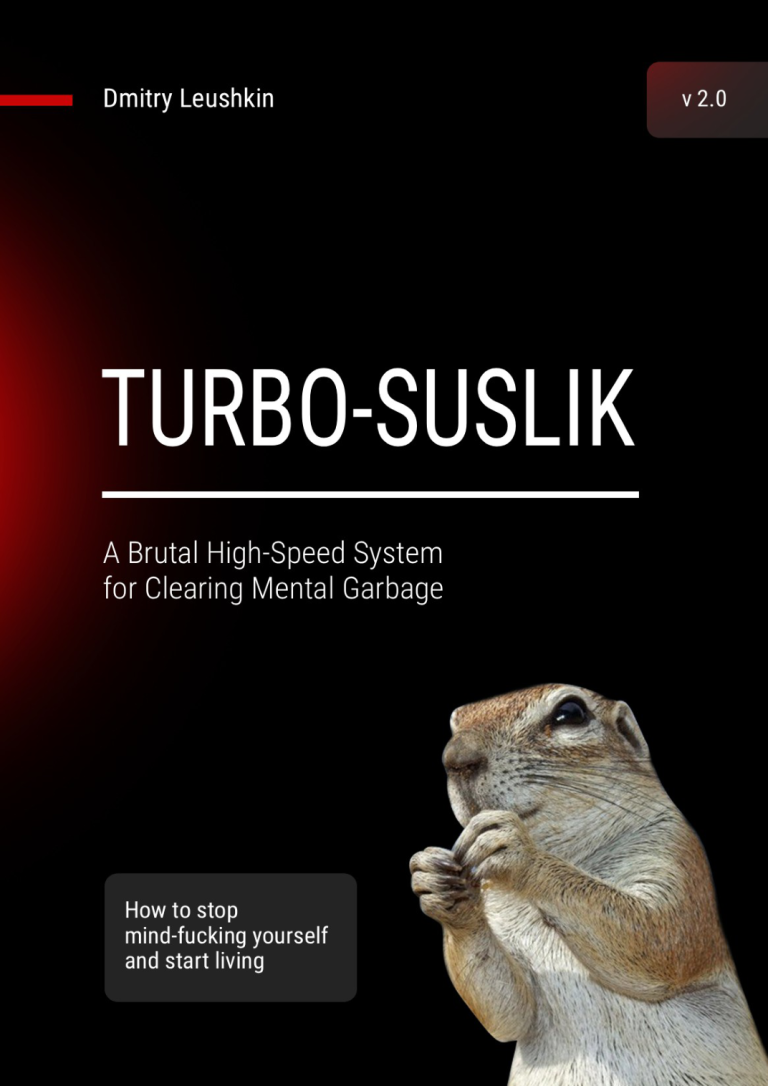
FREE · ENGLISH EDITION · 2026
Turbo-Suslik 2.0
Get the unmodified English edition in your preferred reading format. No payment is required.
For adults 18+. See the book's safety disclaimer before trying any practices. The methods are not established medical or psychological treatments.
Process This: a versatile processing command
The second central name is Process This. The book presents it as a general-purpose processor for a much wider range of material: problems, emotional reactions, beliefs, memories and situations that still carry subjective tension.
Leushkin also explains the processor as a kind of macro. One short command represents a much more elaborate sequence inside the model, potentially addressing associations, past episodes, internal conflict and the emotional charge around a subject. This approach is the basis for the system’s ambition to handle multiple related layers rather than just one isolated thought.
From individual processors to automation
The introductory processors establish the vocabulary for more extensive work. As the book progresses, the author describes automatic procedures and ways to work with lists and groups of material, including the past and recurring life problems. The intention is to make the process increasingly systematic rather than requiring constant improvisation.
This is also why the original sequence matters. Phase 1 lays groundwork through polarities and emotional states. Phase 2 expands into more focused work with memories, beliefs and complex subjects. Our Turbo-Suslik practice guide follows that progression from the reader’s perspective.
Understanding the system without overcomplicating it
At the conceptual level, three elements help everything fit together: the material is what you want to address; the protocol describes the intended operation; and the trigger initiates that operation within the author’s model. You do not need a collection of fashionable psychological buzzwords to understand the structure.
If you’re exploring the approach for the first time, start with our introduction to the Turbo-Suslik system. For the specific roles of beliefs and emotional triggers, continue to Turbo-Suslik and automatic patterns. The book itself remains the definitive reference for the complete instructions.
