










































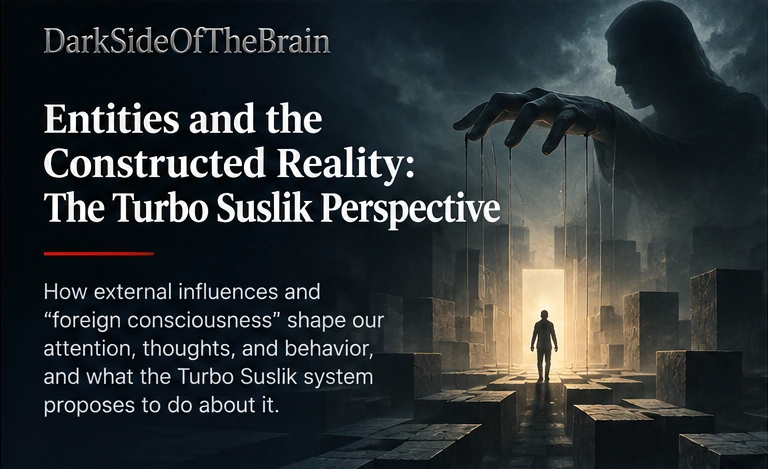

From the Turbo-Suslik 2.0 reading series. This article explains Dmitry E. Leushkin’s approach as presented in the original English edition, with practical illustrations of the ideas and the terminology used in the book.
Why the same patterns seem to repeat
You can meet different people, change jobs and move to another city while still recognizing the same familiar reactions in yourself. Perhaps criticism instantly provokes defensiveness. Perhaps an unanswered message triggers an old fear. Perhaps every new opportunity is accompanied by the same doubt. Turbo-Suslik approaches such repetitions as signs of accumulated mental material.
Dmitry Leushkin’s model suggests that an automatic reaction rarely exists in isolation. Memories, evaluations, fears, expectations and decisions made in earlier circumstances may reinforce one another. The system’s purpose is to organize work with this wider material instead of treating each episode as a completely new problem.
The past as a source of emotional charge
One of the book’s central themes is the influence of past events on present reactions. A situation may be long over while its emotional tone continues to influence everyday behavior. According to the author, reducing that charge is an important step toward responding more freely in current circumstances.
The goal is not to erase the historical fact of what happened. Leushkin describes a direction in which an old memory becomes less intrusive and no longer dominates the present. This is why the book allocates an important place to past episodes and introduces more focused work with them in the second phase.
Beliefs that quietly shape decisions
Automatic beliefs need not announce themselves as clear verbal statements. A person might behave as though success invites punishment, closeness leads to rejection or mistakes are intolerable. Those assumptions can become noticeable only when a particular situation triggers them.
Turbo-Suslik frames such beliefs as material linked to emotional responses and previous experiences. Within its protocol model, the reader does not have to solve every connection through endless conscious reasoning. The author proposes structured processing intended to address the constellation of material sustaining the pattern.
Download the Original Turbo-Suslik 2.0 Book
For the complete system, its definitions, work plan and original processing instructions, visit the Turbo-Suslik 2.0 book landing page. You can choose the free English PDF or EPUB edition directly below.
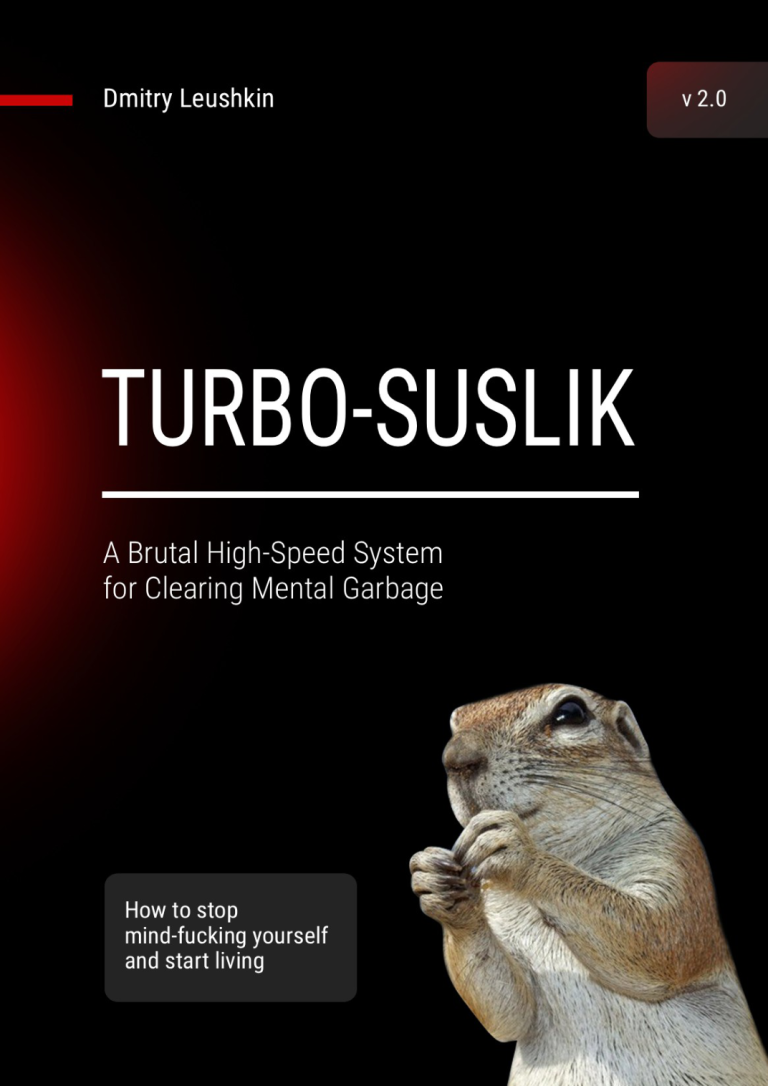
FREE · ENGLISH EDITION · 2026
Turbo-Suslik 2.0
Get the unmodified English edition in your preferred reading format. No payment is required.
For adults 18+. See the book's safety disclaimer before trying any practices. The methods are not established medical or psychological treatments.
Polarities and internal contradiction
The book gives special emphasis to polarities: pairs of opposing states or evaluations that compete for control. Wanting something while being afraid of it is an accessible example. So is seeking recognition while fearing visibility, or craving independence while fearing disapproval.
Leushkin’s Merge processor is introduced for this kind of opposing material. Within the system, the desired movement is from repeated inner conflict toward greater integration. The author treats work with polarities as foundational because conflicting tendencies can affect countless other choices and reactions.
Emotions and the broader work plan
Phase 1 also includes systematic attention to emotional states. The book describes an expanded emotional-scale approach that moves through a wide range of experiences rather than merely selecting whichever emotion feels most dramatic on a particular day. The author’s practical emphasis is steady work with a broad base of material.
Emotional responses are not portrayed as enemies to be suppressed. The aim is to reduce their automatic grip. The system is designed so that a person can experience emotions without being dragged into prolonged loops by them. See the practical work plan and expected changes for how these themes fit into the book’s two phases.
From separate reactions to a coherent whole
Leushkin also describes integration of the personality as a larger purpose of mental processing. In his model, different habitual ways of reacting can pull the same person in contradictory directions. Working through related material is intended to reduce this fragmentation over time.
The everyday expression of that goal is simple: more consistency between what you value, what you choose and how you respond. Our Turbo-Suslik overview explains the big picture, while the protocols guide details the instruments the author describes.
