















































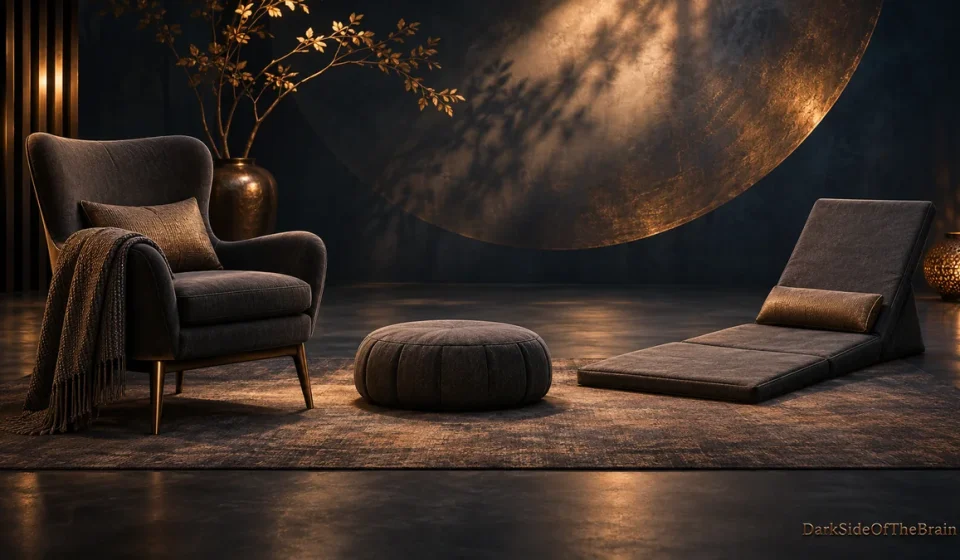

The best meditation posture is one that lets you follow the intended practice without unnecessary strain. It does not have to resemble a photograph of a person sitting cross-legged. A supported chair, a standing position, or a comfortable reclining arrangement may be more useful than a position that looks traditional but hurts.
Posture is a practical setup decision. It can affect comfort, alertness, and the sensations available to notice, but no single position proves that someone is meditating correctly. This guide offers general options rather than individualized advice for an injury or medical condition.
Start with function, not appearance
Ask three questions: can I breathe comfortably, can I remain reasonably supported, and can I change position when needed? These are more useful starting points than trying to achieve perfect symmetry or an unusually straight back.
“Upright” need not mean rigid. You can allow a natural spinal position and use the back of a chair. “Relaxed” need not mean collapsing into a position that becomes uncomfortable. Look for a workable middle ground, then revise it based on what actually happens.
The article on proprioception and body position explains why sensing where the body is does not depend only on vision. During a session, you can notice support and movement without repeatedly inspecting or correcting your appearance.
Sitting in a chair
A chair is a complete option, not a lesser version of floor meditation. Choose one that feels stable. Place your feet on the floor or a suitable support, and rest your hands where your shoulders do not need to hold them up.
You can sit against the backrest, sit slightly forward, or use a small cushion if that is comfortable. Avoid turning any of these options into a universal rule. Body proportions, fatigue, clothing, and the chair itself all affect what works.
Begin with a short session and make one adjustment at a time. If your feet are dangling, address that first. If your shoulders are working to hold the arms, support the hands. A useful adjustment has a clear purpose; constant fine-tuning can become a distraction of its own.
Sitting on the floor
Floor sitting is optional. A cushion or folded support may make some positions more comfortable, but it does not make every cross-legged position appropriate for every body. Do not force the knees downward or pull the feet into a demanding pose.
If you already use a comfortable floor position, notice whether it remains comfortable after several minutes. The position that feels fine at the start may not suit a longer session. Keeping a chair nearby makes changing position straightforward.
Pain, increasing numbness, or tingling is a reason to move and reassess, not a spiritual test. If symptoms persist or you have relevant health concerns, seek professional advice about positioning. Meditation instructions should not override restrictions given for your condition.
Standing meditation
Standing can be useful when sitting feels confining or when you want a short practice between activities. Choose a stable surface and remain near support if needed. Keep the knees comfortable rather than deliberately locked, and let the arms rest naturally.
Notice contact through the feet and the small adjustments involved in standing. You do not need to eliminate every sway. Keep your eyes open enough to remain oriented to the room, and stop if you feel dizzy or unsteady.
A standing practice can last only a minute or two. It is not an endurance exercise. If standing is tiring or uncomfortable, sit down. The attentional task can continue in another position without invalidating what you have already practiced.
Lying down or reclining
Reclining is a reasonable choice when sitting is uncomfortable or when the intended practice includes rest. Use a position you already know to be comfortable, with supports as needed. There is no requirement to lie flat on your back.
Sleepiness may be more noticeable in a familiar resting position. That does not make reclining wrong; it means the position may suit some purposes better than others. If your aim is to remain awake, you could try a more upright position, open your eyes, or practice at a different time.
Our body scan meditation guide describes a practice that can be adapted across positions. The scan is an attentional sequence, not a requirement to keep the body motionless while discomfort increases.
A simple posture check before practice
Check the support
Notice where weight is resting: feet, seat, back, or the surface beneath you. Make sure the support feels stable. If you must keep bracing to prevent slipping, change the setup before asking yourself to attend quietly.
Check unnecessary effort
Notice the jaw, shoulders, and hands. You do not need to relax every muscle completely, but you can release effort that serves no practical purpose. Let ordinary breathing continue without lifting the chest into a deliberately impressive posture.
Check your ability to respond
Know how you will move if you need to. Place a mobility aid within reach when relevant, and avoid positions that make standing afterward difficult. A comfortable exit from the session is part of a sensible setup.
Moving during meditation
Stillness can simplify a practice, but movement is not automatically a failure. If you need to adjust, notice the intention, move deliberately, and reconnect with the chosen anchor. You do not have to wait until discomfort becomes intense.
For example, if your shoulder begins to ache, rest the hand on a cushion or change how the arm is supported. After moving, feel the new contact points. The adjustment provides information about the setup rather than evidence of poor concentration.
This differs from using every mild urge as a command to move immediately. You can notice a harmless impulse briefly and decide. The distinction is practical: responsiveness allows a choice, while rigid endurance and automatic fidgeting each remove some of that choice.
What posture cannot tell you
A straight back does not reveal someone’s level of awareness. A scan of the body does not diagnose why a sensation is present. The difference between noticing bodily signals and interpreting them accurately matters when evaluating discomfort.
Research on meditation programs rarely establishes one universally superior everyday posture. The NCCIH overview describes a varied field. Choose positioning according to access, comfort, and the task, without attaching unsupported health claims to an arrangement of the body.
Frequently asked questions
Must I keep my hands in a special position?
No special hand position is required for a general mindfulness exercise. Rest them where the arms feel supported. A tradition may teach a particular gesture, but that is a contextual instruction, not proof that other hand positions prevent attention.
Should I buy a meditation cushion?
Only if it solves a practical problem for you. Try existing stable seating first. Equipment is optional, and a purchase cannot guarantee a more comfortable or consistent practice.
Can I alternate positions within one session?
Yes. Make transitions safely and deliberately. A short seated period followed by standing can be a clear plan. The relevant question is whether you can follow the practice comfortably, not whether you remained in one pose until the timer ended.
Sources
NCCIH. Meditation and Mindfulness: Effectiveness and Safety.
