















































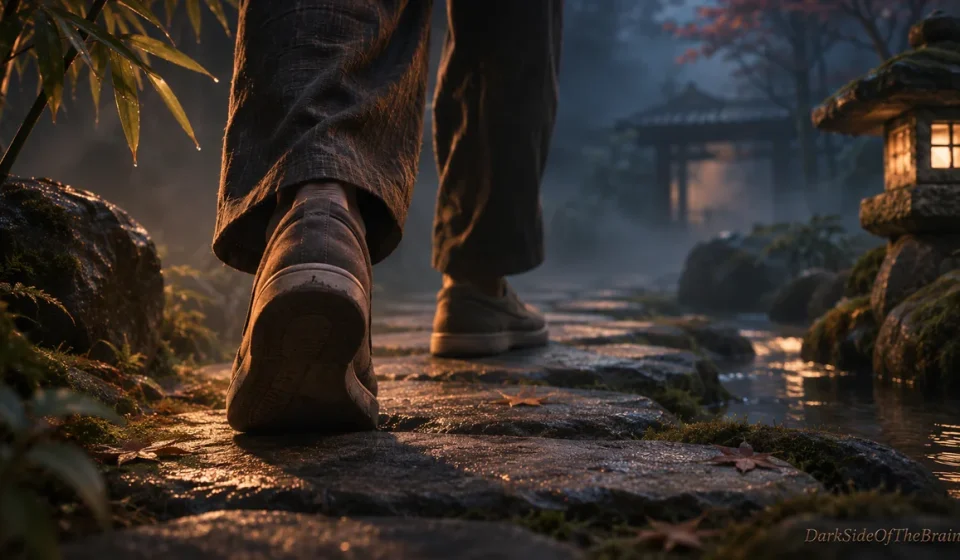

A familiar walk can pass almost unnoticed while you rehearse a conversation or plan dinner. Walking meditation changes the assignment: for a short stretch, the movement itself becomes something you deliberately notice. The destination still matters, but it no longer occupies the whole foreground.
You do not need to walk at an unusually slow pace or look ceremonial. A safe route, an appropriate speed, and a clear attentional cue are enough for an introductory practice. The instructions below are adaptable suggestions, not a balance exercise, rehabilitation program, or promise of stress relief.
Walking meditation versus walking while thinking
Ordinary walking can include useful planning, conversation, exercise, or enjoyment of a landscape. Walking meditation sets aside a period for noticing movement and surroundings, recognizing distraction, and returning. The difference is primarily the instruction you are following.
For example, you might feel pressure shift from one foot to the other for several steps. Then you notice that attention has moved into an imagined meeting. Rather than finishing the meeting in your head, you reconnect with the next step and the path ahead.
This does not require shutting out the world. Our guide to selective attention explains how attention gives some information priority. During a walk, safety-relevant information must remain available. Traffic, other pedestrians, pets, and changes in the surface take precedence over a meditation instruction.
Choose the setting before choosing the pace
A clear indoor corridor or level, familiar outdoor path is a useful starting place. Remove obvious trip hazards. Avoid narrow stairways, icy surfaces, crowded sidewalks, or routes that require frequent navigation decisions for your first experiment.
Keep your eyes open. Look far enough ahead to walk normally and notice obstacles. Do not aim your gaze at your feet continuously. Headphones are optional on a safe indoor route, but spoken instructions must not interfere with hearing your surroundings outside.
If you use a mobility aid, keep using it. If walking is painful or balance is uncertain, choose a seated movement practice instead or ask an appropriate professional about movement options. Meditation does not require a particular way of moving through space.
A short practice in six stages
1. Stand and orient
Before moving, notice the floor, the available space, and where you plan to turn. Feel your feet inside your shoes. Let your arms rest naturally. You are preparing to walk, not trying to create an ideal posture.
2. Begin at a comfortable speed
Take several ordinary steps. Notice the rhythm that is already present. There is no need to synchronize breathing with footsteps or change your stride to match a count. A natural pace often makes it easier to stay aware of the surroundings.
3. Choose one movement cue
Try the changing pressure under the feet, the swing of the arms, or the movement of the legs. Choose one cue rather than monitoring every joint. The article on proprioception explains how sensing body position differs from merely looking at the body.
4. Recognize distraction and reconnect
When you notice planning, remembering, or judging, acknowledge that shift and feel the next step. A quiet word such as “walking” can help, but constant labeling is unnecessary. You do not need to recover all the steps you missed.
5. Include turning and stopping
At the end of the route, stop before turning if that feels safer. Notice the intention to change direction and then make the turn normally. These transitions are part of the practice, not interruptions that must be excluded from it.
6. Finish with an ordinary action
After a few minutes, stop somewhere safe and look around. Notice whether your pace or attention changed, without deciding that change must be an improvement. Then continue with your day. A short, clearly ended session is easier to understand than trying to meditate throughout every movement.
Slow walking and everyday walking serve different purposes
Slow walking can make parts of a step easier to distinguish, but slower is not inherently better. Very deliberate movement can feel awkward and may make balance less comfortable. Use only a pace that feels stable and natural enough for your situation.
Everyday mindful walking is more flexible. Between two nearby places, you might notice ten steps and then return to ordinary navigation. You can also alternate short periods of movement awareness with looking at your environment. This is an attentional choice, not a competition in continuous awareness.
For example, on a quiet path, attend to the contact of your shoes for a short stretch. At a crossing, stop the exercise and handle the crossing normally. Resume only once the route is uncomplicated again. A useful practice should accommodate the task rather than displace it.
What to do with restlessness, boredom, and self-consciousness
If you feel an urge to speed up, notice that urge and decide deliberately. You may keep the current pace or change it. The learning opportunity is recognizing the choice, not suppressing every impulse to move differently.
Boredom can be approached by noticing concrete variation: pressure shifts, temperature, nearby sound, or the transition between standing and moving. Do not invent special sensations to make the practice interesting. If you remain bored, a short session can still be completed without being dramatic.
If you feel conspicuous, practice at an ordinary speed or choose a private route. There is no requirement to demonstrate that you are meditating. Walking a corridor naturally while attending to a few steps is a legitimate introductory exercise.
How this fits with seated meditation
Walking can provide a different context for attention when a seated session feels impractical. It is not automatically easier: movement adds changing sensory information and practical demands. Choose the format that lets you understand and follow the instruction today.
Our comparison of focused attention and open monitoring offers another distinction. You can give the feet a clear foreground role, or allow movement, sound, and vision to enter a broader field. Start with one approach rather than repeatedly changing the task mid-session.
Keep evidence claims proportionate
The NCCIH meditation overview discusses varied practices and programs. It does not establish that this particular walking sequence produces a specific clinical benefit. Exercise, being outdoors, taking a break, and following attentional instructions are also different ingredients.
If a walk leaves you feeling better, you can value that experience without claiming to know its mechanism. Assess practical outcomes that matter to you, such as whether the route was safe and whether the instructions were easy to follow. Meditation should not replace assessment of persistent dizziness, pain, or distress.
Frequently asked questions
Should I coordinate the breath with steps?
You do not have to. Let breathing take care of itself and use movement as the reference point. If coordinating them creates strain or makes you less aware of the route, drop the coordination.
Can I practice in a city?
Choose uncomplicated stretches and prioritize navigation. A busy crossing is a place to attend to traffic, not to narrow awareness onto foot sensations. In a crowded setting, a brief pause in a safe location may be more suitable.
Does a very short walk count?
Yes, as practice in following an instruction. A few attentive steps are not equivalent to a studied meditation course, but they can help you learn the basic action: notice, recognize a shift, and return while remaining responsive to the world.
Sources
NCCIH. Meditation and Mindfulness: Effectiveness and Safety.
