
















































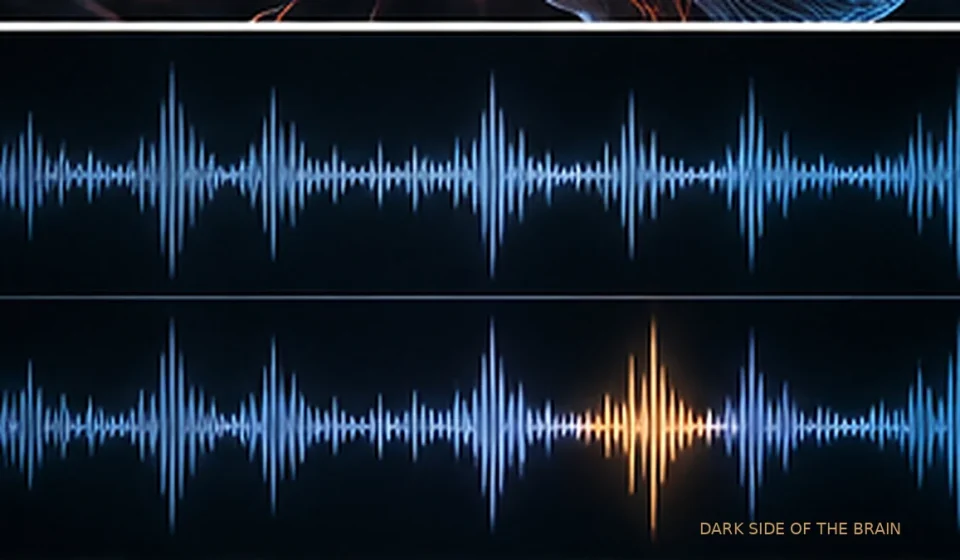

A recording plays the sounds of a busy kitchen: water, dishes, footsteps, and a refrigerator. It plays again, but one noise has been replaced. You are asked what changed. Even though the two versions sound ordinary and you have normal hearing, you may struggle to identify the difference. The difficulty is called change deafness: a failure to notice a change between auditory scenes or events.
The finding matters because people often assume that if a sound was present and their ears were functioning, they would notice a meaningful alteration. Experiments show that this assumption is too simple. Detecting a sound, organizing it into an object, remembering its earlier form, and consciously recognizing a change are different processes. Any of them may matter when a comparison fails.
An auditory relative of change blindness
In vision research, change blindness refers to failures to notice surprisingly large modifications to a scene, particularly when the transition interrupts attention or visual continuity. Auditory researchers developed related tasks to ask whether the same broad limitations occur in hearing. Sometimes listeners hear two successive versions of a sound scene and must report what changed; in other tasks, a speaker’s voice or a continuous sound alters during an ongoing activity.
The resemblance between the phenomena is instructive, but vision and hearing are not identical systems. Sound unfolds through time in ways that differ from a static picture, and source identity can depend on pitch, rhythm, location, and other acoustic properties. A good explanation of auditory change detection must respect these differences rather than simply copying a visual theory.
The surprising experiment with changing voices
One influential study investigated whether listeners notice when a voice changes during a speech task. Participants attended to spoken material, and under some conditions a change between voices went undetected. The paper, Change Deafness: The Inability to Detect Changes Between Two Voices, helped establish that listening to speech does not guarantee conscious tracking of every characteristic of the speaker.
This is not equivalent to saying participants could not hear the voices. Speech recognition and voice-change detection draw on partially different information. You might understand the sentence perfectly while failing to compare the identity or acoustic features of the current voice with the previous one. The task you are performing shapes which aspects of the sound become important.
How a repeated scene tests auditory memory
Consider two ten-second soundscapes separated by a brief pause. To detect a substitution, a listener may need to encode the original sounds, keep relevant information available, organize the new scene, and compare the versions. The task therefore involves more than raw auditory sensitivity. If too many sound objects compete, the representation of the first scene may be incomplete or difficult to retrieve.
Research on change perception in complex auditory scenes investigated the roles of transients and auditory short-term memory. Its findings illustrate why limits on memory can be central to what listeners report. However, memory is not the only possible explanation, and the importance of individual mechanisms varies with the design of a particular experiment.
Why similarity makes changes hard to hear
If an electric drill is replaced with birdsong, the difference may be obvious. If one similar engine sound is replaced by another, the change may be harder. Perceptual similarity, uncertainty about source identity, and overlapping acoustic features can interfere with comparison. A listener might recognize that a machine-like sound is present in both scenes but lack enough distinguishing information to identify the replacement.
A review of stimulus similarity and uncertainty in change deafness argues that sound information itself deserves attention alongside memory and selection. This matters because failures are sometimes explained too casually as “the person wasn’t paying attention.” Sometimes the sound categories or feature combinations are genuinely difficult to distinguish under the experimental conditions.
Attention can help, but it is not unlimited
When someone is told which source might change, detection can improve. Attention helps allocate resources to the relevant object and its defining features. In experiments with complex sound scenes, directing attention toward the changing object has sometimes produced substantial benefits. This supports the view that listeners do not maintain equally detailed representations of everything they can hear.
Nevertheless, even directed attention has limits. Some sounds are brief, similar, or masked by other events; memory for their details may decay or become confused. Listening performance is shaped by the environment and the task, not just the strength of a person’s intention. Our article on inattentional deafness addresses another way auditory awareness can fail when attention is occupied elsewhere.
A slow change can be especially deceptive
People often imagine changes as abrupt replacements. Yet gradual shifts can also escape notice because no single moment feels dramatically different from the moment before. In a study of slow change deafness, researchers altered the pitch of continuous speech, and many participants missed a shift that became easier to detect when they were warned about its possibility.
The finding does not imply that every unnoticed gradual change is caused by an inability to remember sounds. The task highlights how expectations and comparison strategies matter. If you never expect a speaker’s pitch to change, you may process the speech’s meaning while allowing the acoustic characteristic to drift outside explicit awareness.
Does the brain register a change we cannot report?
A perceptual failure need not mean that all neural processing stopped. Brain-imaging and electrophysiological studies sometimes show responses associated with physical sound changes even when listeners cannot report them. This creates an important distinction between stimulus representation and conscious detection. Yet a neural response by itself cannot reveal exactly what information the person experienced or understood.
For example, a study separating physical and perceived auditory change used change-deafness conditions to investigate these levels. Interpreting such findings requires care. A measurable response to a changed sound does not prove that the full identity of that sound was consciously available but deliberately ignored.
Everyday examples worth interpreting cautiously
You may fail to notice that a café’s background music has changed, or that a fan is now making a slightly different noise. Someone else notices immediately because they were attending to that source. These are plausible illustrations, not diagnoses. Everyday environments differ from controlled experiments, and a missed change can have many causes.
It is especially important not to equate change deafness with hearing impairment. A person with normal hearing can show the effect in a demanding task. A person with hearing difficulties may also struggle for sensory reasons requiring appropriate assessment. Research on cognitive attention cannot replace individual clinical evaluation of persistent or new auditory problems.
Why this is not simply “bad memory”
Suppose a sound changed, and afterward you cannot describe the first version. Poor retrieval may contribute, but it is not proof that the information was never encoded. Alternatively, you may remember the general category of a source without having stored the feature that changed. You can recognize “a vehicle was present” while failing to remember which specific vehicle-like sound it was.
This distinction between gist and detail is useful across perception. The mind often retains what seems sufficient for current action rather than an exhaustive record of every stimulus. Our article on source monitoring in memory examines a related limitation: remembering information while losing track of where it came from.
Try a safe listening demonstration
Ask someone to prepare two short recordings of an ordinary environment, making one modest substitution in the second. Use a comfortable volume and listen once to each, without knowing in advance what changed. Write down the sounds you noticed before hearing the pair again. On the second pass, look for the difference. You may discover that a source seemed obvious only after it was identified.
Keep the exercise informal. It cannot measure hearing acuity, establish a personal attention score, or reproduce a published experiment without careful controls. Its value is experiential: it reveals how much information a listener believes was preserved compared with what can actually be reported. Avoid intense volume or startling stimuli simply to make the demonstration dramatic.
What change deafness tells us about awareness
Conscious auditory experience often feels continuous and complete. A person may believe they heard the whole room, yet an experiment reveals missing comparisons. The lesson is not that nothing outside attention is processed; it is that processing and reportable awareness are different things. A sound can affect the system without becoming an explicit remembered event.
This distinction complements other perceptual limitations discussed on our site, including the attentional blink and visual crowding. Each probes a different bottleneck, and none should be generalized into a claim that perception is arbitrary or disconnected from reality.
The useful conclusion is more precise than “we hear nothing”
Change deafness demonstrates the selectivity of auditory representation and comparison. The physical signal, the sound objects organized by the auditory system, the remembered scene, and the change reported by a person need not contain the same information. Research continues to ask which factor dominates in different circumstances: attention, similarity, uncertainty, organization, or memory.
In daily life, the result encourages modesty about what you assume you noticed. When an important detail matters, ask for repetition, reduce background interference, or compare evidence directly. A failure to detect a change is not evidence of laziness. It is a reminder that awareness, even when it feels effortless, has a structure and limits.
Why careful comparisons matter
In a controlled study, the experimenter knows exactly what changed and can vary one feature while holding others stable. In ordinary life, the listener rarely has that privilege. Changes in distance, loudness, attention, context, and expectation can occur together. A careful approach separates whether the signal was accessible, whether it could be distinguished, and whether it was remembered well enough to compare. Those questions make change deafness a serious topic in cognitive science rather than a party trick about inattentive people.
